

Last reviewed: 10 November 2026. This is the page to read first. It does not list every temple in China — it walks you through the four decisions that determine whether your trip works: how long you have, which part of the country you go to, what you must set up before you fly, and what has to be booked in advance. Each section links to the detailed guide.
The four decisions
| Decision | Why it matters | Guide |
|---|---|---|
| 1. When to go | Weather, crowds and price swing more than any other factor | Best time to visit |
| 2. Which region | China is continent-sized; a bad route means half your trip on trains | Itineraries |
| 3. What to set up | Visa, payments and mobile data are decided before you fly | Visa · Payment · SIM |
| 4. What to book | Trains, the Forbidden City and popular hotels sell out | Trains · Hotels |
Step 1: how long, and when
One week buys you two cities. Two weeks buys you four, with one internal flight. Three weeks is the point at which you can add a region properly — Yunnan, the Silk Road, or the northeast.
On timing: late September and October and April to early May are the best windows almost everywhere. Avoid the first week of October (Golden Week) and Chinese New Year, when transport and hotels are at capacity and prices double.
If your dates are fixed by work or school, do not fight it — pick the region that matches the season instead. Yunnan and Qinghai are best in summer; Harbin is best in January; Hainan is best when the north freezes.
Step 2: which region
| Region | What you get | Days needed |
|---|---|---|
| The classic — Beijing, Xi’an, Shanghai | Imperial history, the Great Wall, the modern city | 9–12 |
| Southwest — Chengdu, Chongqing, Yunnan | Food, pandas, mountains, ethnic minority culture | 10–14 |
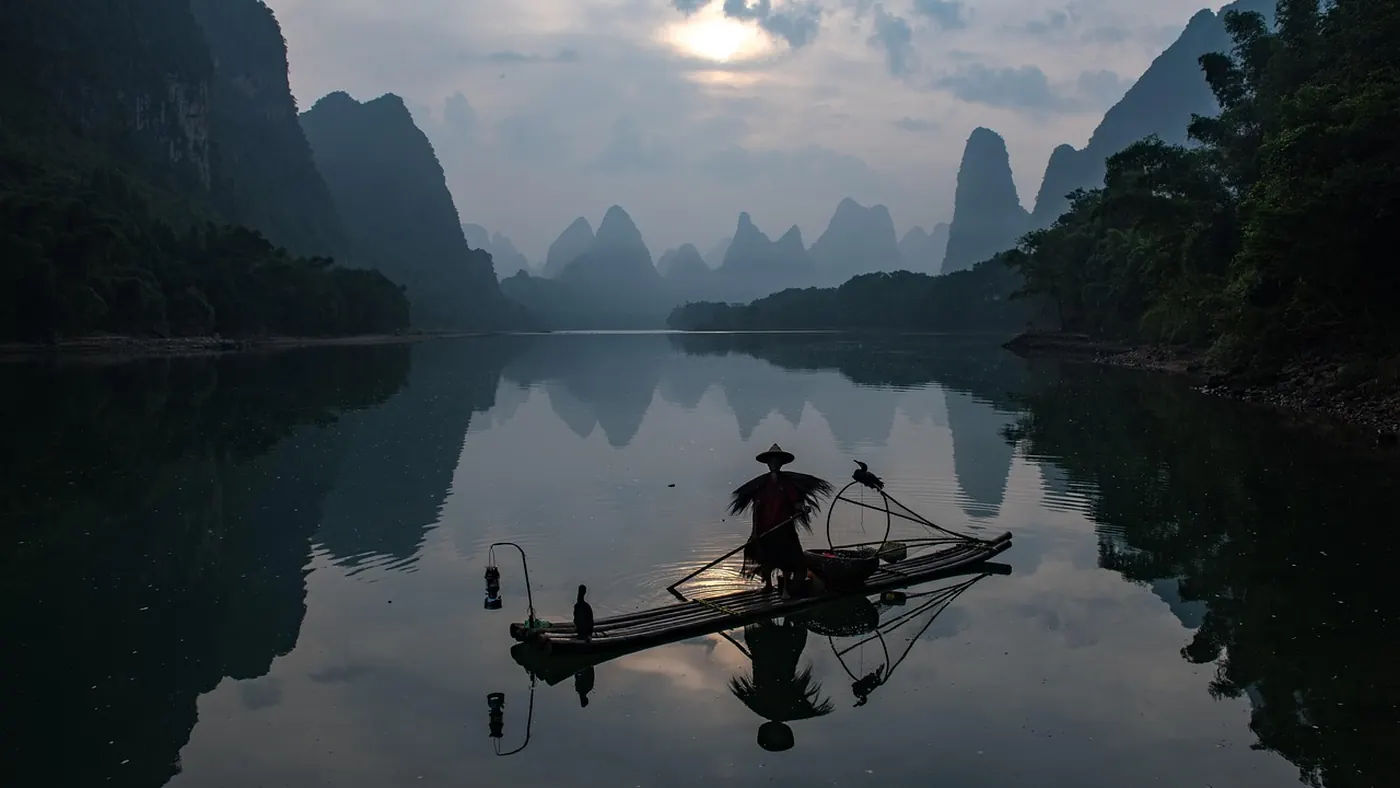
| South — Guilin, Yangshuo, Guangzhou | Karst landscapes, Cantonese food, Hong Kong access | 7–10 |
| East coast — Shanghai, Suzhou, Hangzhou | Gardens, water towns, the easiest introduction | 5–7 |
| West — Tibet, Qinghai, Xinjiang | High-altitude landscapes; permits and planning required | 10–14 |
First trip? The classic route. Second trip? The southwest. If you have under a week, pick one city and do it properly — a five-day trip split between Beijing and Shanghai spends a fifth of the holiday on a train.
Step 3: what to set up before you fly
Visa
Check three things in order: whether your nationality qualifies for visa-free entry, whether you are eligible for the 240-hour transit policy, and if not, which visa category fits your purpose. A business meeting on a tourist visa is technically a mismatch — see the visa guide for the categories and the document checklist.
Mobile data
An eSIM bought before you travel is the simplest option for one to three weeks: no shop visit, no passport registration, and often it routes outside the mainland firewall. For longer stays, a local SIM with a Chinese number is cheaper. Details, including what is blocked and what to do about it, are in the SIM guide.
Payments
China runs on QR codes. Set up Alipay (and ideally WeChat Pay) with your Visa or Mastercard before departure — the identity verification is much easier on a stable connection. Carry RMB 300–500 in cash for the first day. The step-by-step is in the payment guide.
Step 4: transport and hotels
Trains are the backbone: book on 12306 with your passport about 15 days ahead, and use high-speed rail for anything under five hours. Above that, fly. The train guide covers seat classes, station procedures and refund rules.
Hotels have one trap: properties need a licence to accept foreign guests, and many cheap domestic chains do not have one. Book through an international platform and check the guest policy. The accommodation guide explains how to tell, plus what check-in actually requires.
What to book in advance
- Forbidden City — tickets online, seven days ahead, passport required. No gate sales.
- Terracotta Army — three days ahead in high season.
- Zhangjiajie and Jiuzhaigou — timed entry; book when you book the trip.
- Trains — sales open about 15 days ahead; popular routes and holidays sell out in minutes.
- Hotels during Golden Week and Chinese New Year — months ahead, not weeks.
What a trip costs
| Style | Daily budget per person | What it buys |
|---|---|---|
| Budget | US$50–80 | Hostel or budget hotel, street food, second-class trains |
| Mid-range | US$100–160 | Three-star hotel, restaurant meals, first-class trains occasionally |
| Comfort | US$200–350 | Four-star, good restaurants, taxis, domestic flights |
Excluding international flights. Beijing and Shanghai run 30–50% above these figures; Chengdu, Xi’an and Guilin below them.
Where to start, by city
ShanghaiThe easiest landing: Bund, concession, food. Two days.
ChengduPandas, teahouses and the best food in the country.
GuangzhouDim sum mornings and 2,200 years of trading history.
Common mistakes
- Too many cities. The single most common reason a China trip feels exhausting.
- No payment app. You will spend the first day queuing at a bank instead of eating.
- Booking a hotel that cannot register foreigners. A refund is not much comfort at midnight.
- Buying non-refundable flights before the visa is issued.
- Travelling during Golden Week without booking everything.
- Assuming English is enough. It is enough in hotels; a translation app is enough everywhere else.
Frequently asked questions
Is China safe for tourists?
Yes, very. Violent crime against visitors is rare; the risks are traffic, scams aimed at tourists and altitude in the west.
Do I need a guide?
No. A guide is worth it for the Terracotta Army and for western China, where permits and language make independent travel harder.
Can I drink the tap water?
No. Bottled water is cheap and everywhere; hotels provide kettles and bottles.
How much English is spoken?
In hotels and major attractions, enough. In restaurants and taxis, almost none — have addresses in Chinese characters.
Rules, prices and opening hours change. If something here is out of date, tell us on the contact page.