
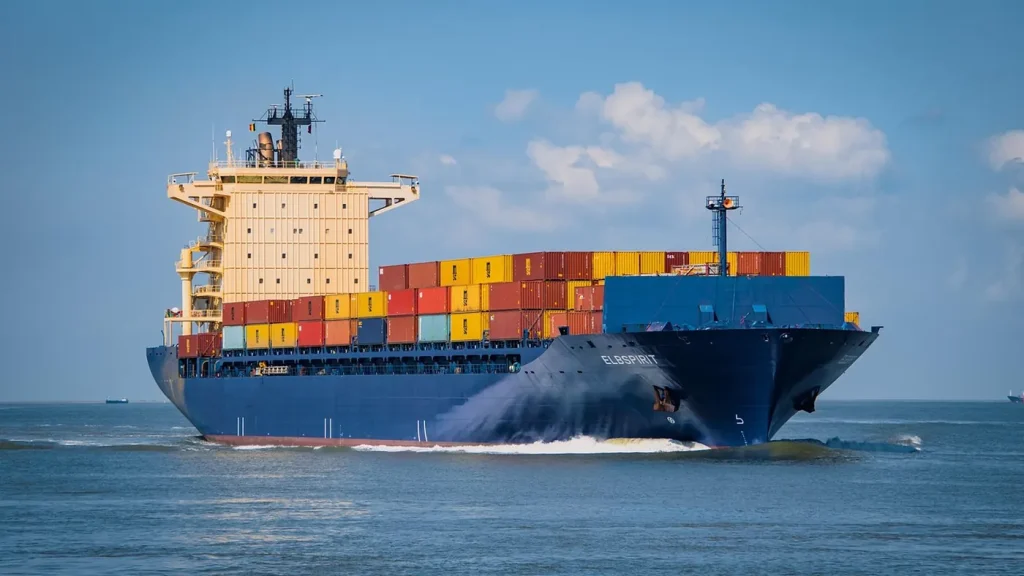
Last reviewed: 10 November 2026. Shipping from China is a market, not a fixed price: the same container can cost twice as much depending on when you book, who you book with, and which Incoterm you agreed. This guide explains the modes, the terms, what freight actually costs, and the mistakes that add a week to a shipment.
The three modes
| Mode | Transit time | Cost | Use for |
|---|---|---|---|
| Sea freight (FCL) | 25–40 days to Europe/US | Lowest per unit | Full containers, 20+ CBM |
| Sea freight (LCL) | 30–45 days | Per cubic metre | Smaller shipments, 1–15 CBM |
| Air freight | 5–8 days | 4–8× sea | High value, urgent, light goods |
| Express courier | 3–7 days | Highest per kg | Samples, parcels under 100 kg |
| Rail (China–Europe) | 18–25 days | Between sea and air | Inland Europe, mid-value goods |
Rail has become competitive for European destinations since sea freight rates spiked, but the routes are limited and the schedules less frequent.
Incoterms that matter
| Term | You pay from | Best for |
|---|---|---|
| EXW | Factory door | You have a forwarder and want control |
| FOB | Loaded on the vessel at the Chinese port | The default for most first orders |
| CIF | Supplier arranges freight and insurance to your port | Simple, but you cannot see the freight margin |
| DDP | Delivered to your door, duty paid | E-commerce, small parcels, no import experience |
FOB is the recommendation for anything substantial: you choose the forwarder, you see the real freight cost, and you control the bill of lading — which is the document that proves ownership in transit.
What freight costs
Rates move constantly. As a rough guide for planning:
- 20ft container, China to Europe: US$1,500–4,500 depending on season and route.
- 40ft container, China to Europe: US$2,500–7,000.
- LCL: US$60–150 per cubic metre plus destination charges.
- Air freight: US$4–9 per kg, with a minimum charge.
Peak season (August–October, before Christmas) adds 30–100%. Booking two to three weeks ahead usually beats booking six weeks ahead — rates are volatile, not like airline tickets.
Who does what
- Freight forwarder — books space, handles documentation, consolidates LCL. Your main contact.
- Customs broker — clears the goods at destination. Often part of the forwarder’s service.
- Carrier — the shipping line or airline. You rarely deal with them directly.
Get three quotes, and compare not just the freight rate but the destination charges — they are where the cheap quote becomes expensive.
The documents
- Commercial invoice and packing list
- Bill of lading (B/L) or airway bill
- Certificate of origin, if required for duty preference
- Insurance certificate, if CIF or if you insure separately
- Product certificates required by the destination (CE, FCC, etc.)
Common mistakes
- Comparing freight rates without destination charges.
- Agreeing CIF and then discovering the supplier chose a slow, cheap carrier.
- Missing the certificate of origin, which can cost several percent in duty.
- Shipping before certification is in place — goods held at port accrue storage charges.
- Assuming the forwarder handles everything; you still own the accuracy of your invoice and packing list.
- Are they licensed (NVOCC or freight forwarder registration)? Ask for the number.
- Do they have an office at destination, or an agent? The destination charges are where surprises appear.
- Can they quote all-in — origin, freight, destination, duty — in one number?
- How do they handle a delay? Ask for a recent example, not a policy.
- Do they respond in writing within a day? A forwarder who is slow to quote is slower when a container is stuck.
Choosing a forwarder
Rates vary by 30–50% between forwarders for the same route, and service varies more than that. A short checklist:
Insurance
Cargo insurance costs 0.3–0.6% of the goods value and covers loss or damage in transit. If you ship on CIF, the seller insures — but only at minimum cover, and the beneficiary arrangement matters. For anything valuable, insure on your own policy and name yourself as beneficiary.
Photograph the goods at loading. Claims without evidence of condition at origin are routinely refused.
Frequently asked questions
Should I use the supplier’s forwarder?
Only for small orders or DDP. For anything substantial, use your own so the bill of lading is under your control.
How much can I fit in a container?
A 20ft holds about 28 CBM, a 40ft about 58 CBM, and a 40ft high-cube about 68 CBM — assuming efficient packing.
What about customs clearance?
Your broker handles it. Ensure the HS code is right and the invoice value is honest; under-declaration is the fastest way to a hold.
Freight rates change weekly. If something here is out of date, tell us on the contact page.