
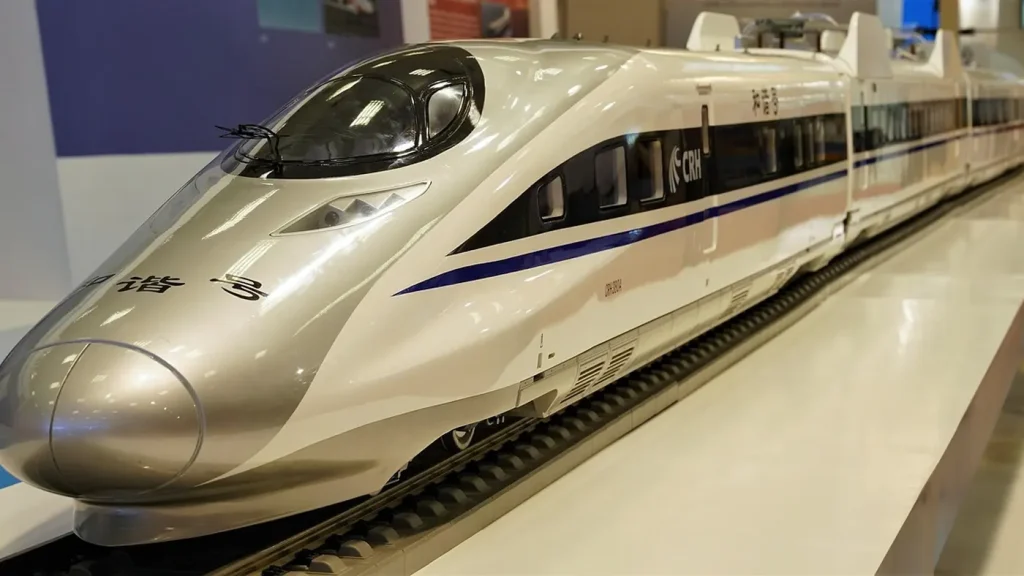
Last reviewed: 10 November 2026. China’s high-speed rail network is the easiest way to move between cities: 40,000 km of track, trains every few minutes on trunk routes, and stations in city centres. The hard part is not the train — it is booking one without a Chinese ID. This guide covers the 12306 app in English, which stations to use, how seat classes differ, and what happens when plans change.
Why take the train instead of flying
On routes under about 1,200 km, high-speed rail usually wins once you count door-to-door time. Beijing to Shanghai is 4.5 hours city centre to city centre; the flight is 2 hours plus two airport transfers and a security queue. Trains also run on time in weather that grounds planes, and you can walk into the station 20 minutes before departure.
Fly for the long hauls — Beijing to Kunming, Shanghai to Urumqi — where rail takes 10 hours or more.
The train categories
| Prefix | Type | Speed | Use it for |
|---|---|---|---|
| G | High-speed, fastest | 300–350 km/h | Trunk routes between major cities |
| D | High-speed, slower | 200–250 km/h | Cheaper alternatives on the same corridors |
| C | Intercity | 200–350 km/h | Short commuter routes (Beijing–Tianjin, Shanghai–Suzhou) |
| Z / T / K | Conventional sleeper and slow trains | 80–160 km/h | Overnight trips, remote regions, tight budgets |
For tourists, G and D cover almost everything. C trains are useful for day trips. Sleeper trains are worth considering only where high-speed rail does not go.
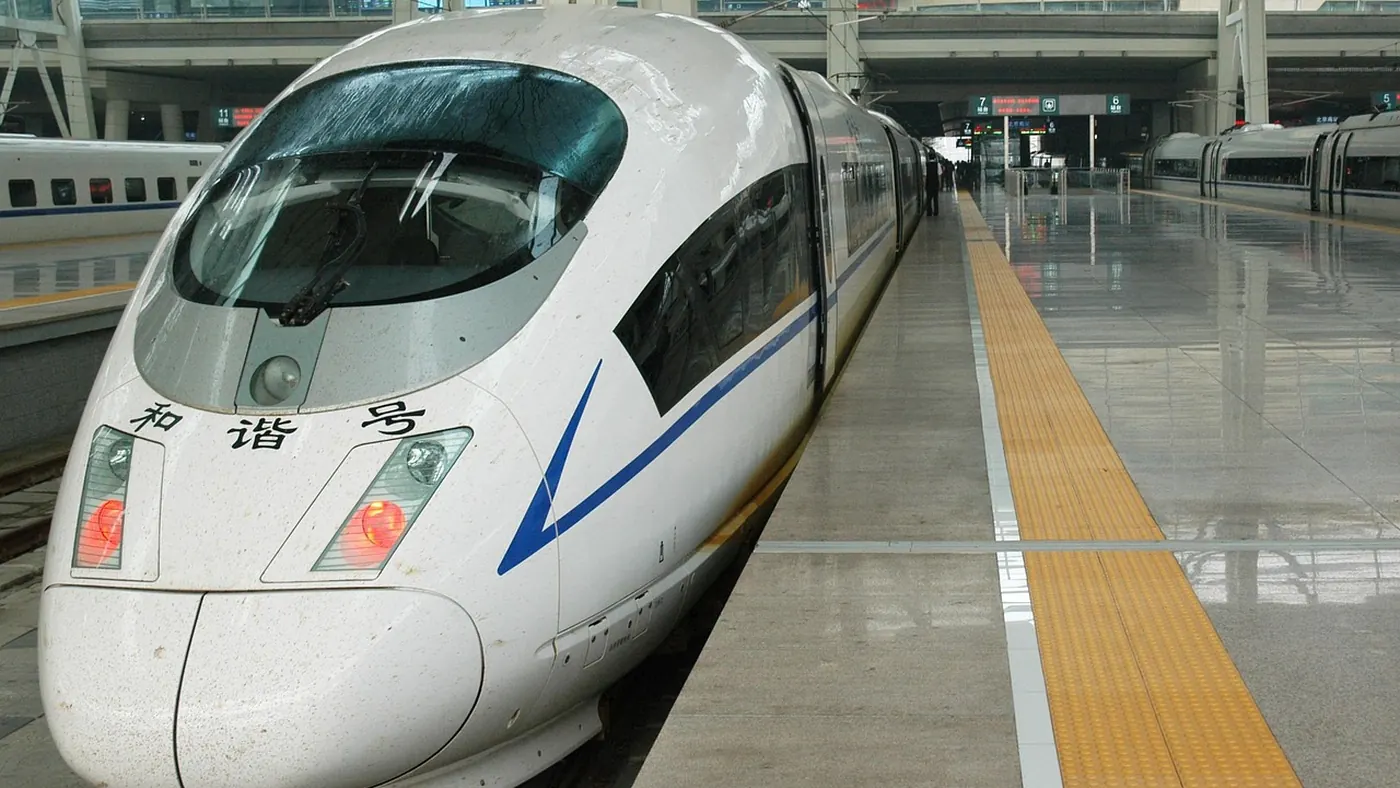
Booking: the 12306 app
12306 is the official railway booking system. It has an English interface, accepts international credit cards, and — critically — lets foreign passengers register with a passport instead of a Chinese ID.
- Download 12306 from your app store. The international version is the same app; switch the language to English in settings.
- Register with your passport. Enter your name exactly as it appears in the machine-readable zone — surname first, no middle name unless printed. Verification can take from a few minutes to a day; do it before you need to book.
- Search your route. Use the Chinese city name if the English one does not resolve (for example “Beijing” may return several stations).
- Pick a train and a seat class (see below). Prices are fixed by the railway; there is no dynamic pricing and no advantage to booking early, only availability.
- Pay by international card. Alipay and WeChat Pay also work if you have set them up.
- You get an e-ticket. There is nothing to print — your passport is the ticket.
Tickets usually go on sale about 15 days before departure. Popular routes and holiday periods sell out within minutes, so book on the day sales open if you are travelling around Chinese New Year, the May holiday or the October Golden Week.
Seat classes explained
| Class | What you get | Relative price |
|---|---|---|
| Second class | 3+2 seating, decent legroom, overhead luggage | 1× |
| First class | 2+2 seating, wider seats, more recline, quieter carriage | ~1.6× |
| Business class | 1+2 lie-flat or deep recline, meals, lounge access at some stations | ~3× |
| Soft sleeper | Four-berth compartment with a door (overnight trains) | varies |
| Hard sleeper | Six-berth open compartment (overnight trains) | cheapest |
Second class is fine for journeys under three hours. For four hours or more, first class is worth the extra — the difference in comfort is real on a full train.
Six routes worth taking by train
| Route | Time | Why |
|---|---|---|
| Beijing → Shanghai | 4h30 | The classic; city centre to city centre, no airport transfer |
| Shanghai → Hangzhou | 45–60 min | Day trip to West Lake, dozens of trains a day |
| Beijing → Xi’an | 4h30 | Terracotta Army without a domestic flight |
| Chengdu → Chongqing | 1h20 | Two food cities in one morning |
| Guangzhou → Guilin | 2h30 | Karst scenery; the last hour is the view |
| Shanghai → Huangshan | 3h | Yellow Mountain without an overnight bus |
Book these on the day sales open if you are travelling in a holiday week. On ordinary dates, a day or two ahead is usually enough.
Travelling during Chinese holidays
Three periods overwhelm the rail network: Chinese New Year (late January to mid-February, dates move each year), the May Day holiday (1–5 May), and National Day week (1–7 October). During these windows, hundreds of millions of people move at once and the practical rules change:
- Sales open 15 days ahead and sell out in minutes on trunk routes. Set an alarm.
- Standing tickets appear on some routes; they are cheap and uncomfortable for anything over an hour.
- Stations become chaotic. Arrive 60–90 minutes early, not 30.
- Prices do not rise — only availability changes. If a route is sold out, try the next morning’s train or a nearby station.
- Hotels and attractions are also at capacity. Book both before you book the train.
If your dates are flexible, avoid these weeks entirely. The difference between a normal Tuesday and the first day of Golden Week is not 20% more crowded — it is a different transport system.
Families, seniors and accessibility
- Children under 1.2 m travel free without a seat; above that, a child ticket is required. Bring the child’s passport if they have one.
- Seniors can use the priority lanes at most large stations; staff are generally helpful with luggage.
- Wheelchair users should book through the station’s service desk rather than the app — lifts and boarding ramps exist at major stations but are not consistently signposted.
- Large luggage has no weight limit but must fit the racks; a 28-inch case is fine, two of them plus a stroller is not.
At the station
- Arrive 30–40 minutes early at large stations (Beijing South, Shanghai Hongqiao, Guangzhou South). They are the size of airports.
- Security first. Bags go through an X-ray; you will be asked to drink from any open bottle.
- No ticket needed. Scan your passport at the gate — the e-ticket is linked to it. Some stations have a manual lane for foreign passports; look for the staffed gate.
- Boarding closes 5 minutes before departure. The train will leave without you.
- Luggage: there are racks at the end of each carriage and overhead space. Nobody weighs your bag, but oversized suitcases are awkward on packed trains.
Changing and refunding
Changes and refunds are handled in the 12306 app, and the fees scale with how close you are to departure:
- More than 8 days before: small or no fee.
- 48 hours to 8 days: around 5%.
- 24 to 48 hours: around 10%.
- Under 24 hours: around 20%.
Once the train has departed, the ticket cannot be refunded. If you miss it, go to the ticket office the same day — staff can sometimes rebook you onto a later train, but there is no guarantee.
Practical notes
- Food: trolley service sells snacks and instant noodles; station convenience stores are better. Bring water.
- Power: every seat has a socket on G and D trains; bring a universal adapter.
- Wi-Fi: available on some trains but unreliable. Do not depend on it.
- Toilets: Western-style on most high-speed trains, squat on older ones.
- Quiet: phone calls are common and loud. Noise-cancelling headphones are the single best thing you can pack.
Frequently asked questions
Can I book with a passport?
Yes. Register on 12306 with your passport, and use the passport at the gate. This works for most nationalities; a few require counter booking, so try the app first.
Do I need to print the ticket?
No. Since 2020 the e-ticket is linked to your ID. Your passport is the ticket.
Can I buy at the station instead?
Yes, ticket offices sell to foreigners with a passport, but queues are long, English is limited, and popular trains sell out. Use the app.
Is it cheaper to book earlier?
No. Chinese rail prices are fixed. Booking early only improves availability, not price.
What about luggage on overnight trains?
Soft sleepers have space under the lower berth; hard sleepers have a small rack. Pack a bag you can lift above your head.
Schedules, prices and refund rules change. If something here is out of date, tell us on the contact page.