
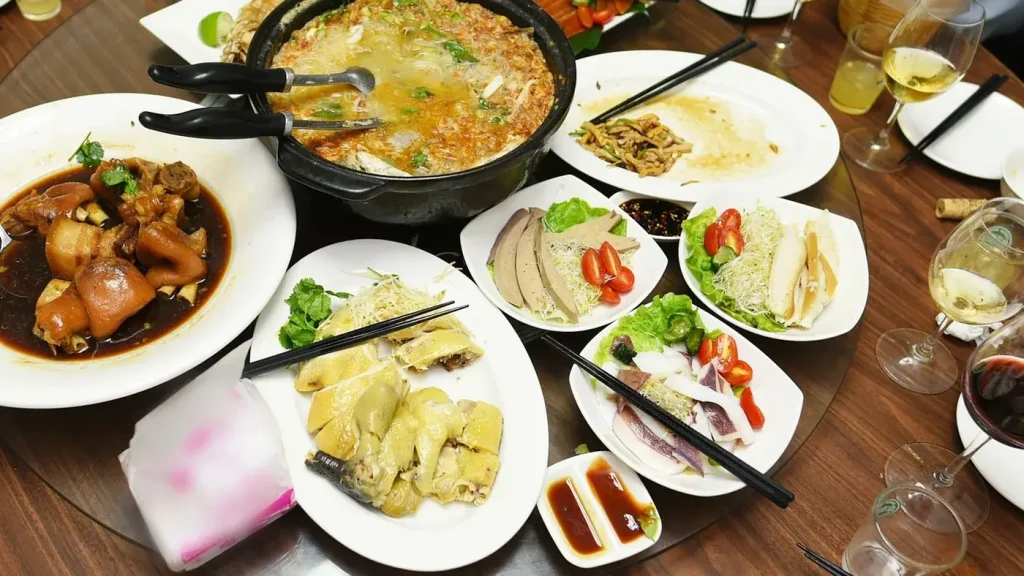
Last reviewed: 10 November 2026. Chinese food is not one cuisine. It is at least eight regional traditions that share a repertoire of techniques but disagree about almost everything else — how much chilli, how much vinegar, whether rice or wheat, whether the ingredient or the sauce is the point. This guide is the map: what to eat, where, and how to order without a menu in English.
What makes it different
- Everything is shared. Dishes arrive in the middle; you take from the plate. Rice or noodles come last.
- Texture matters as much as taste. Chewy, slippery, crunchy and gelatinous are deliberate, not accidents.
- Balance, not heat. Sichuan food is not simply spicy — it is málà, numbing and hot together, balanced with sweetness and vinegar.
- Freshness is the selling point. Cantonese restaurants keep live fish in tanks because “fresh” is a price tier, not a slogan.
The eight traditions, briefly
| Cuisine | Region | Signature | Heat |
|---|---|---|---|
| Sichuan | Chengdu, Chongqing | Hotpot, mapo tofu, dan dan noodles | Very high, numbing |
| Cantonese | Guangzhou, Hong Kong | Dim sum, roast goose, steamed fish | Low |
| Shandong | Jinan, Qingdao | Braised sea cucumber, scallion pancakes | Low |
| Jiangsu | Suzhou, Yangzhou | Sweet braised pork, soup dumplings | Low, sweet |
| Zhejiang | Hangzhou | West Lake fish, Dongpo pork | Low, delicate |
| Fujian | Fuzhou, Xiamen | Buddha Jumps Over the Wall, seafood soups | Low, umami |
| Hunan | Changsha | Steamed fish head with chilli, smoked pork | High, dry heat |
| Anhui | Huangshan | Bamboo shoots, wild herbs, braised meats | Low, earthy |
Sichuan and Hunan are the two spicy traditions, and they are not the same: Sichuan uses peppercorns for numbness, Hunan uses fresh and dried chilli for pure heat. Cantonese is the most approachable for a first-timer, and the most expensive at the top end.
How to order
- One dish per person, plus one. Two people: three dishes and rice. Four people: five dishes.
- Balance the table: one meat, one fish or seafood, one vegetable, one tofu or egg, one soup.
- Order a “cold dish” first — peanuts, cucumber, sliced beef. It arrives immediately and buys time.
- Say 微辣 (wēi là) if you want mild. In Sichuan it still means spicy; ask for 不辣 (bù là) if you want none.
- Rice comes last, and is often free or a few yuan.
What to try first
| Dish | What it is | Where it is best |
|---|---|---|
| Xiaolongbao | Soup dumplings, thin-skinned | Shanghai, Suzhou |
| Mapo tofu | Silken tofu in chilli and bean paste | Chengdu |
| Peking duck | Crisp duck, pancakes, spring onion | Beijing |
| Dim sum | Small steamed and fried dishes | Guangzhou, Hong Kong |
| Biangbiang noodles | Wide hand-pulled noodles with chilli oil | Xi’an |
| Hotpot | Communal broth, raw ingredients | Chongqing, Chengdu |
Practical notes
- English menus are common in tourist areas and rare elsewhere; a translation app with camera mode is essential.
- Tipping is not expected.
- Tap water is not drinkable; boiled water or bottled is standard, and restaurants serve hot water by default.
- Allergies are hard to communicate. Peanut oil and soy are everywhere; learn the phrase for your allergy and carry a card in Chinese.
- Vegetarian food exists but is often cooked with meat stock or lard; Buddhist restaurants are the reliable option.
Breakfast, like a local
Chinese breakfast is regional, cheap and eaten standing up. What to look for, by city:
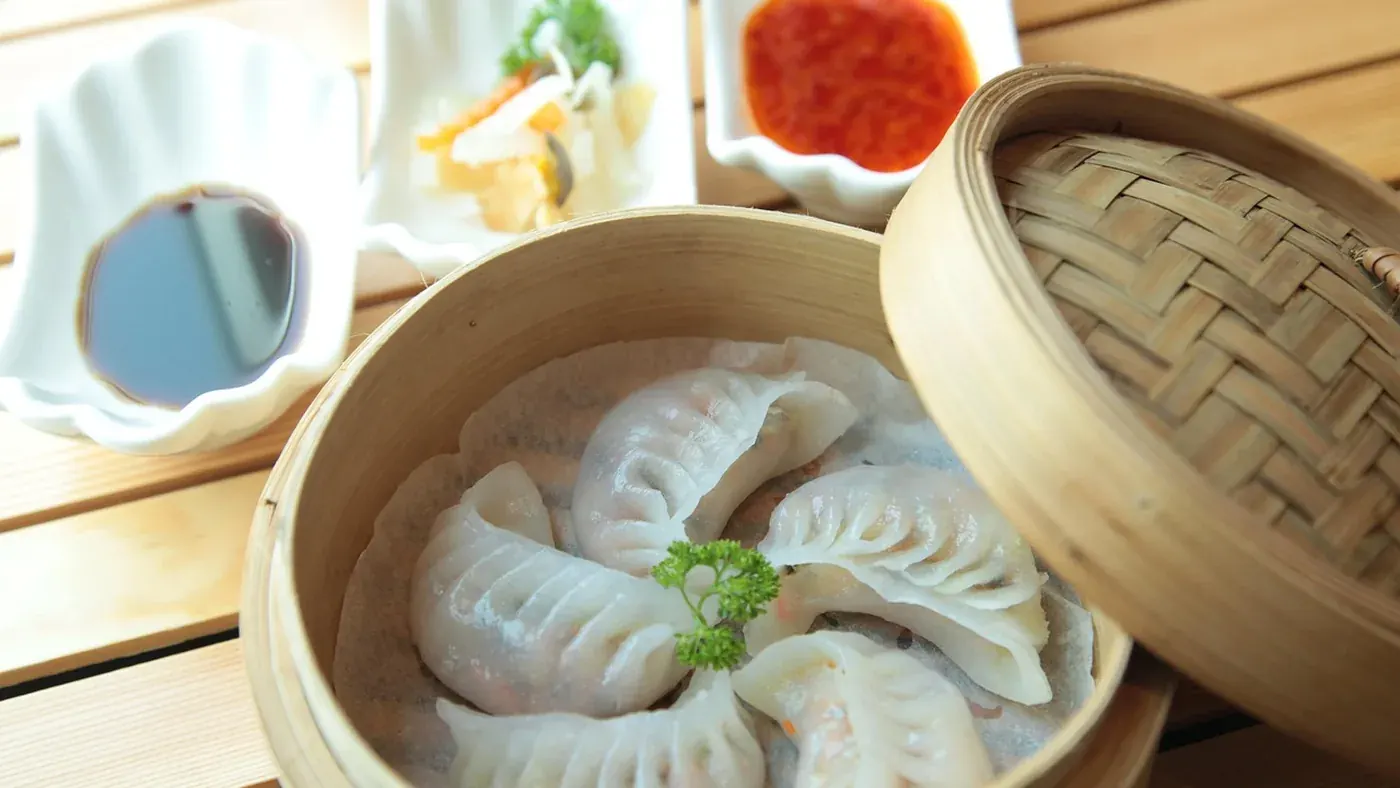
| City | Breakfast | Cost |
|---|---|---|
| Beijing | Jianbing (crepe), youtiao (fried dough), soy milk | RMB 8–15 |
| Shanghai | Shengjianbao (pan-fried buns), congee, scallion noodles | RMB 10–20 |
| Chengdu | Dandan noodles, red oil wontons | RMB 10–18 |
| Guangzhou | Dim sum, rice noodle rolls, congee with pork | RMB 30–60 |
| Xi’an | Roujiamo (meat sandwich), soy milk, cold noodles | RMB 10–20 |
Breakfast stalls close by 9:30. If you want to eat like a local, set an alarm — the good ones are gone before the coffee shops open.
Ordering without a menu
Pointing works. Photograph the dish you want from the next table, or the wall pictures, and show the waiter. Useful phrases: 这个 (this one), 不要辣 (no chilli), 打包 (takeaway), 买单 (the bill). Menus in tourist areas have photos and English; elsewhere, a camera translation app is faster than asking.
Frequently asked questions
Is Chinese food unhealthy?
It can be oily and salty, but the vegetable-heavy, shared-dish format is easy to eat well. Avoid deep-fried dishes and you are fine.
Can I eat street food safely?
Yes, at busy stalls with high turnover. Avoid anything that has been sitting out, and drink bottled water.
What if I cannot eat spicy food?
Order Cantonese, Jiangsu or Zhejiang dishes. Sichuan and Hunan kitchens put chilli in almost everything, including the vegetables.
Is MSG used?
Yes, widely, though less than the stereotype suggests. It is not harmful, but you can ask for 不放味精 (no MSG).
Can I eat gluten-free?
With difficulty. Soy sauce contains wheat, and noodles and dumplings are everywhere. Rice-based dishes and plain steamed fish are safer.
How much does a meal cost?
RMB 20–45 at a neighbourhood restaurant, RMB 80–200 per person at a mid-range restaurant, and RMB 300+ at the top end.
Restaurants change, regions vary. If something here is out of date, tell us on the contact page.