
Last reviewed: 10 November 2026. Most first trips to China fail for the same reason: too many cities, too little time, and a route that zigzags across a country the size of a continent. These three itineraries — 7, 10 and 14 days — are built around train times, not wishful thinking. Each one names what to cut if you have less time, and what to add if you have more.
The rule that makes routes work
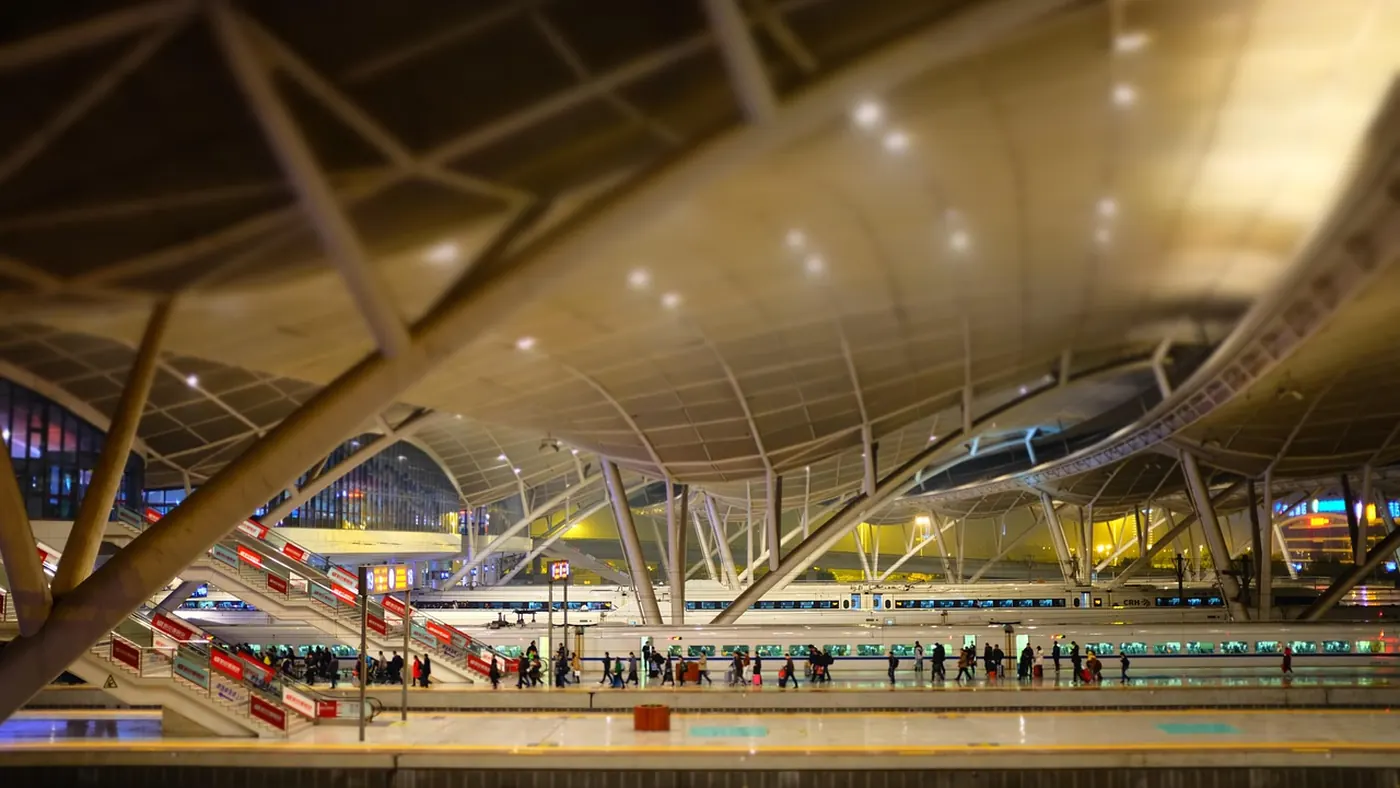
China’s high-speed rail is excellent, but it is still four to five hours between major cities. Two rules keep an itinerary realistic:
- Never move cities on consecutive days. Every transfer costs half a day even when the train is fast.
- Pick one region, not one country. Beijing–Shanghai–Xi’an–Chengdu is already 2,000 km. Adding Guilin and Hong Kong turns a holiday into a logistics exercise.
The 7-day route: Beijing and Shanghai
For a first trip with one week, do two cities properly rather than four badly. The train between them is 4.5 hours.
| Day | Where | What |
|---|---|---|
| 1 | Beijing | Arrive, Forbidden City and Tiananmen in the afternoon |
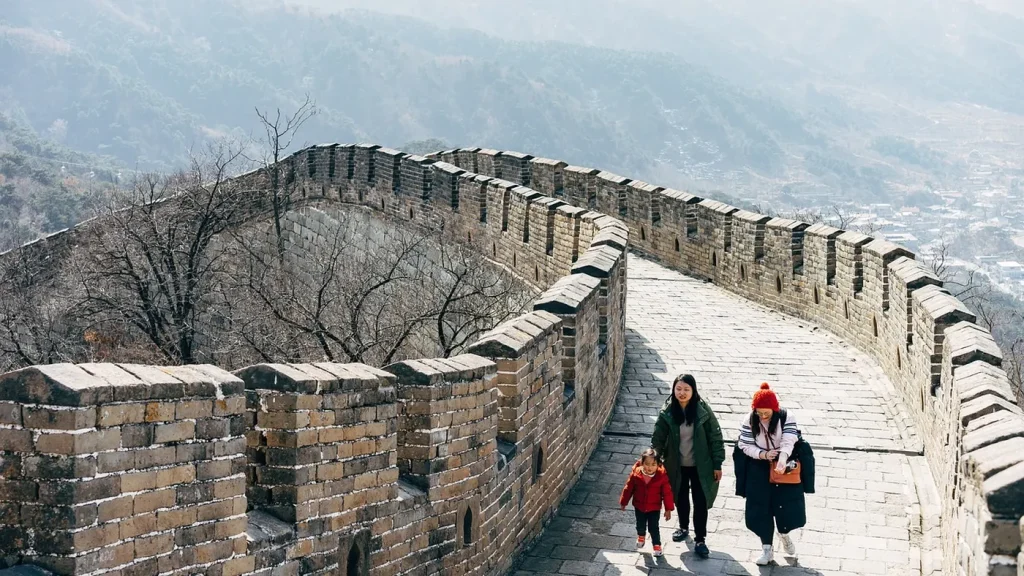
| 2 | Beijing | Great Wall at Mutianyu, early start |
| 3 | Beijing | Temple of Heaven, hutongs, Peking duck |
| 4 | Beijing → Shanghai | Morning train, afternoon on the Bund |
| 5 | Shanghai | Former French Concession, Yu Garden, river cruise |
| 6 | Shanghai | Day trip to Suzhou or Hangzhou (45–60 minutes by train) |
| 7 | Shanghai | Museum, shopping, departure |
If you have one day less: cut day 3 and take the train on day 3 instead. If you have two more: add Xi’an between Beijing and Shanghai (4.5 hours each way).
The 10-day route: Beijing, Xi’an, Shanghai
This is the classic first-timer route: imperial capital, ancient capital, modern city. Three cities, two long train legs.
| Day | Where | What |
|---|---|---|
| 1–3 | Beijing | Forbidden City, Great Wall, hutongs, Temple of Heaven |
| 4 | Beijing → Xi’an | Morning train (4.5h), evening Muslim Quarter |
| 5 | Xi’an | Terracotta Army in the morning, city wall by bicycle in the afternoon |
| 6 | Xi’an | Big Wild Goose Pagoda, Shaanxi History Museum |
| 7 | Xi’an → Shanghai | Train or short flight; afternoon in the French Concession |
| 8 | Shanghai | Bund, Yu Garden, Pudong skyline |
| 9 | Shanghai | Day trip to Suzhou or Hangzhou |
| 10 | Shanghai | Departure |
Swap for: replace Xi’an with Chengdu if pandas and food matter more than dynastic history. The Chengdu route pairs better with Chongqing than with Shanghai.
The 14-day route: Beijing, Xi’an, Chengdu, Guilin, Shanghai
Two weeks lets you add the landscape that most itineraries miss. This route has one internal flight to avoid a 12-hour train.
| Day | Where | What |
|---|---|---|
| 1–3 | Beijing | As above |
| 4–5 | Xi’an | Terracotta Army, city wall, Muslim Quarter |
| 6–8 | Chengdu | Panda base, teahouses, Sichuan food, day trip to Leshan |
| 9–11 | Guilin / Yangshuo | Li River cruise, karst cycling, rice terraces |
| 12–14 | Shanghai | Bund, Suzhou day trip, departure |
The Chengdu–Guilin leg is the awkward one: fly (2 hours) rather than take a 12-hour train. Guilin–Shanghai is a 3-hour flight or a 10-hour train — fly.
What each city is actually for
| City | Give it | Do not miss | Skip if… |
|---|---|---|---|
| Beijing | 3 days | Mutianyu Great Wall, Forbidden City, hutongs | You hate crowds and queues |
| Xi’an | 2 days | Terracotta Army, city wall at dusk | You have under 10 days |
| Shanghai | 2–3 days | Bund at night, French Concession | You want traditional China only |
| Chengdu | 3 days | Panda base at opening, teahouse afternoon | You cannot handle spicy food |
| Guilin/Yangshuo | 3 days | Li River, cycling the Yulong River | It is raining heavily (April–June) |
| Hangzhou | 1–2 days | West Lake at dawn, Longjing tea fields | You have already seen Suzhou |
How to book the transport
Book high-speed rail on 12306 as soon as sales open (about 15 days ahead) for popular routes and any holiday period. Flights are cheaper booked two to four weeks ahead; domestic airlines are reliable and the airports are efficient.
Do not book a train that arrives after 21:00 in a city you do not know — you will spend the evening finding your hotel in the dark.
Seasonal adjustments
- Spring (March–May): best overall. Add Hangzhou and Suzhou; avoid the first week of May, which is a national holiday.
- Summer (June–August): hot and wet in the south, crowded everywhere. Move the itinerary north, or add Guilin for the rice terraces.
- Autumn (September–October): the best weather; avoid the first week of October. Beijing and Xi’an are at their best.
- Winter (November–February): cold in the north, mild in the south. Harbin’s ice festival is worth a dedicated trip; Beijing is quiet and cheap.
City-to-city transport at a glance
| Leg | Best option | Time | Notes |
|---|---|---|---|
| Beijing → Xi’an | G-train | 4h30 | Several departures before 09:00; Beijing West and Xi’an North |
| Xi’an → Chengdu | G-train | 3h30 | Through the Qinling mountains; book a window seat |
| Chengdu → Chongqing | G-train | 1h20 | Trains every 20 minutes, no need to book far ahead |
| Chengdu → Guilin | Flight | 2h | Train is 12h+; the flight is worth the cost |
| Guilin → Shanghai | Flight | 2h30 | Alternatively 10h by train — not worth the saving |
| Beijing → Shanghai | G-train | 4h30 | The busiest route in the country; book when sales open |
| Shanghai → Hangzhou | G-train | 45–60 min | Dozens of trains daily; no need to book ahead |
| Shanghai → Suzhou | G-train | 25–35 min | Effectively a commuter route |
Add 45 minutes at each end for metro and station security, and never book an arrival after 21:00 in a city you do not know.
Budgeting the route
Per person, excluding international flights, for a mid-range trip (three-star hotels, mostly trains, one domestic flight):
| Route | Daily budget | Transport share | Total |
|---|---|---|---|
| 7 days, Beijing + Shanghai | US$110–160 | US$220 | US$990–1,340 |
| 10 days, + Xi’an | US$100–150 | US$320 | US$1,320–1,820 |
| 14 days, + Chengdu + Guilin | US$100–150 | US$650 | US$2,050–2,750 |
The jump in the 14-day route is the domestic flight. If you drop Guilin and finish in Chengdu, you save roughly US$300 and two travel days.
If you only have five days
Do one city. Beijing for the Great Wall and the imperial sites, or Shanghai for comfort and day trips. A five-day trip that tries to cover Beijing and Shanghai spends a fifth of the holiday on a train and arrives tired in both.
If you are transiting and have 24–72 hours, use the 240-hour visa-free transit and stay in one city. Shanghai is the easiest for a short stop: the airport train reaches the city in eight minutes and the Bund is walkable from most hotels.
Frequently asked questions
Is 7 days enough for China?
For two cities, yes. You will see less than you expect and enjoy it more than a four-city sprint.
Should I fly or take the train?
Train under 5 hours, fly above. Add two hours at each end for airports.
Can I do this without speaking Chinese?
Yes on this route. All four cities are used to foreign visitors, and translation apps handle the rest. Learn “hello”, “thank you” and “this one” and you are fine.
How much does the 14-day route cost?
Roughly US$1,800–3,000 per person excluding international flights, depending on hotel class. Transport is 20–25% of that.
Train times and opening hours change. If something here is out of date, tell us on the contact page.