
Last reviewed: 10 November 2026. China’s ancient sites are not ruins behind glass — many are still in use, still being excavated, or still inhabited. This guide selects the ones that are worth the journey and explains what you are actually looking at, because a pile of stones without context is just a pile of stones.
The essential ancient sites
| Site | Era | Location | Why go |
|---|---|---|---|
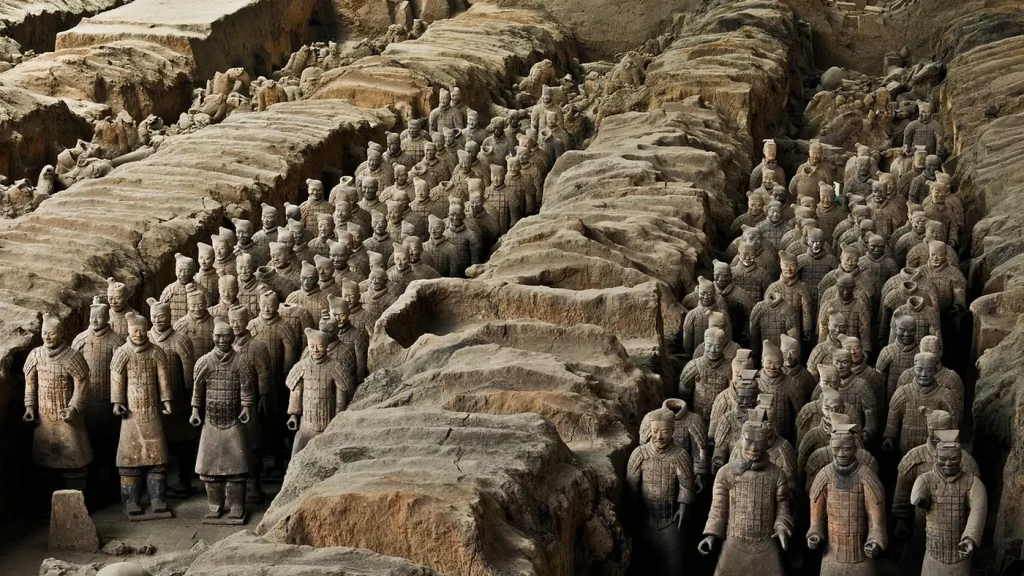
| Terracotta Army | Qin, 210 BC | Xi’an | 8,000 individual soldiers guarding an unexcavated tomb |
| Yin Xu | Shang, 1300 BC | Anyang | The oracle bones and the first Chinese writing |
| Sanxingdui | Bronze Age | Guanghan | Bronze masks from a civilisation nobody expected |
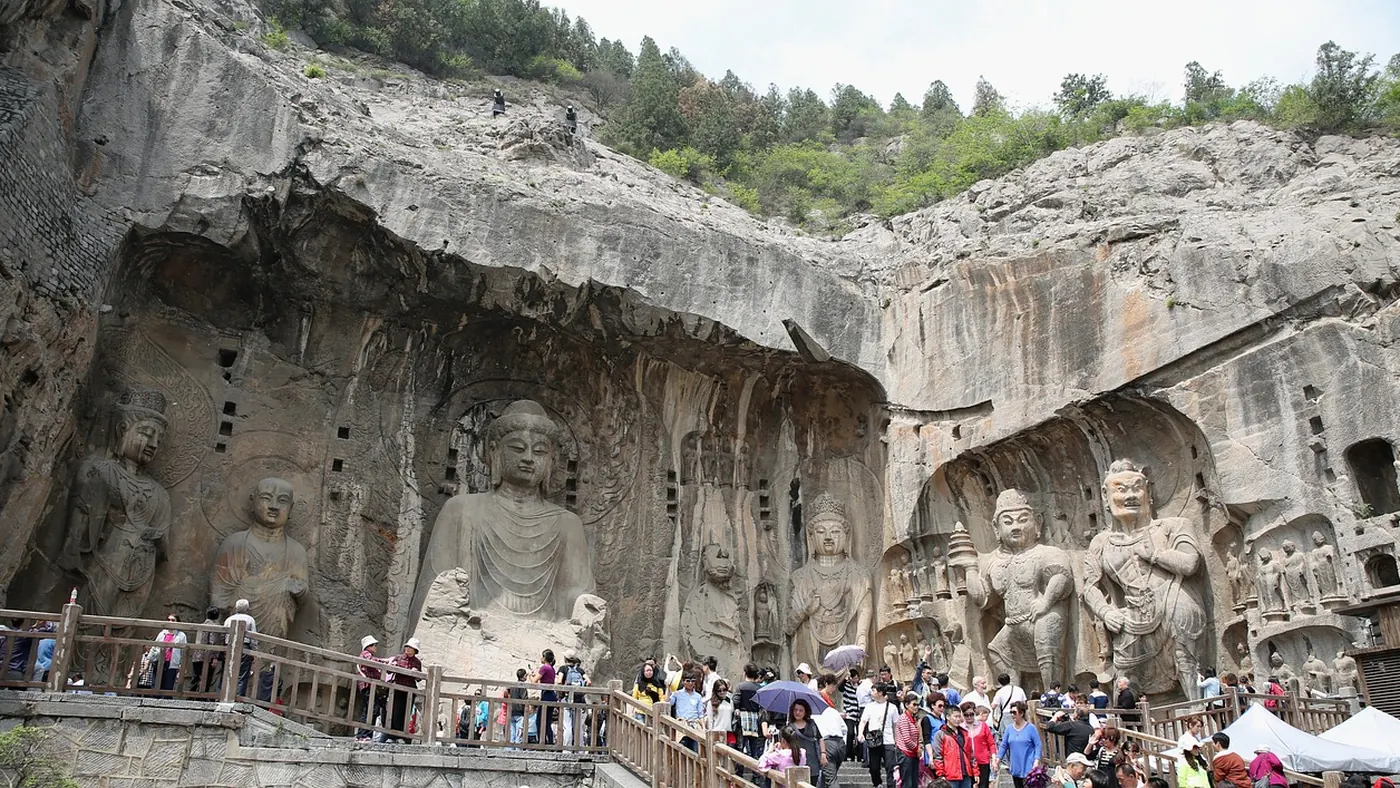
| Longmen Grottoes | Northern Wei–Tang | Luoyang | 100,000 Buddhist figures carved into cliffs |
| Yungang Grottoes | Northern Wei | Datong | 51,000 figures, some 17 m tall |
| Mogao Caves | 4th–14th c. | Dunhuang | Painted caves on the Silk Road; book well ahead |
| Great Wall | Ming (mostly) | Beijing area | The largest structure ever built |
| Forbidden City | Ming–Qing | Beijing | 500 years of imperial power in one axis |
Reading the sites
Bronze and bone (Shang)
Before writing, there were ritual bronzes. The Shang cast vessels for ancestors, and the decoration tells you which clan and which rite. Yin Xu is where the oracle bones were found — turtle shells and ox scapulae inscribed with questions to the gods, the earliest Chinese writing.
Tombs and armies (Qin and Han)
The first emperor’s tomb is unexcavated; what you see is the army that guards it. The scale is the point: each face is different, and the bronze weapons were functional. Han tombs, by contrast, are smaller and more domestic — models of houses, servants and food for the afterlife.
Buddhist caves (Northern Wei to Tang)
Buddhism arrived from India and was carved into cliffs along the trade routes. Yungang shows Indian and Central Asian influence; Longmen shows it becoming Chinese. Mogao, at Dunhuang, is the painted masterpiece, with 1,000 years of murals.
Imperial architecture (Ming and Qing)
The Forbidden City is the canonical example: courtyards, axial symmetry, yellow tiles, and rank expressed in roof figures. Once you can read one, you can read every temple and palace in the country.
Practical advice
- Book ahead: Terracotta Army (3 days), Mogao Caves (weeks, limited daily tickets), Sanxingdui (2 days).
- Hire a guide or take an audio guide at the major sites; without context the experience is a photo opportunity.
- Timing: early morning or late afternoon for light and crowds; avoid Golden Week entirely.
- Photography: no flash in caves and museums; tripods are usually banned.
- Ethics: do not buy “antiquities” from street sellers — exporting genuine relics is a criminal offence.
Reading a site without a guide
Four questions make any Chinese archaeological site legible:
- What was it for? Tomb, temple, palace or city wall — the layout follows the function.
- Who built it, and for whom? Imperial, monastic or domestic. Scale tells you which.
- What is original and what is reconstruction? Many famous buildings are Ming or Qing rebuilds of older sites; the label usually says.
- What was found here, and where is it now? The best objects are usually in the provincial museum, not on site.
Books and context
Two short reads make the sites far more rewarding: a general history of the dynasties, and a guide to Buddhist art for the cave sites. Museum shops in Xi’an, Luoyang and Dunhuang sell good English-language introductions for RMB 50–150.
At the major sites, the official audio guide is worth the RMB 30–50 — it is usually better than the touts outside, and it will not invent history.
Frequently asked questions
Which single ancient site is unmissable?
The Terracotta Army for scale, Mogao for art. If you only see one, choose the Terracotta Army — it is easier to reach and understand.
How old is the oldest site?
Yin Xu dates to about 1300 BC, but earlier Neolithic sites exist. Written history effectively starts with the Shang.
Are the sites accessible?
Mostly yes, with ramps and shuttle buses at major sites. Cave sites are harder.
Are the sites accessible for wheelchairs?
Major sites have ramps and shuttle buses; cave sites and tombs generally do not. Check with the site in advance.
Can I photograph inside the caves?
Usually no flash, and at Mogao photography is restricted in many caves to protect the pigments. Follow the attendant instructions.
Which is closest to Beijing?
The Great Wall and the Forbidden City are in or near Beijing. Yungang is a short flight or overnight train to Datong.
Opening hours and ticket rules change. If something here is out of date, tell us on the contact page.