
Last reviewed: 10 November 2026. China’s famous sites are famous for a reason, but the country has thousands of places that never make the postcard rack. These ten are worth a detour — each one is reachable, uncrowded outside holidays, and genuinely different from the headline attractions.
The ten
| Place | Province | Why | Getting there |
|---|---|---|---|
| Xiapu mudflats | Fujian | Photographers’ paradise: tides, poles, light | Train to Xiapu, then taxi |
| Wuyuan | Jiangxi | Rapeseed terraces and Hui-style villages | Train to Shangrao, then bus |
| Langmusi | Gansu/Sichuan | Tibetan monastery town on the grassland | Bus from Hezuo or Xiahe |
| Kaiping diaolou | Guangdong | Colonial watchtowers built by emigrants | Bus from Guangzhou |
| Qingmuchuan | Shaanxi | Old town on the ancient Shu road | Bus from Hanzhong |
| Dongchuan red land | Yunnan | Iron-red soil, patchwork fields | Bus from Kunming |
| Yandangshan | Zhejiang | Volcanic peaks and waterfalls, few foreigners | Train to Wenzhou, then bus |
| Seda | Sichuan | The largest Tibetan Buddhist academy in the world | Long bus from Chengdu |
| Fujian tulou | Fujian | Communal earthen buildings, still lived in | Bus from Xiamen |
| Hulunbuir grassland | Inner Mongolia | Grass to the horizon, nomad culture | Fly to Hailar |
Three worth planning a trip around
Xiapu
The mudflats at Xiapu are the most photographed landscape in China after the Great Wall, and almost no foreign tourists go. The trick is the tide: at low water the poles and nets form patterns, at high water they reflect the sky. Hire a local driver for sunrise and sunset spots; the good ones know the tide tables.
Wuyuan
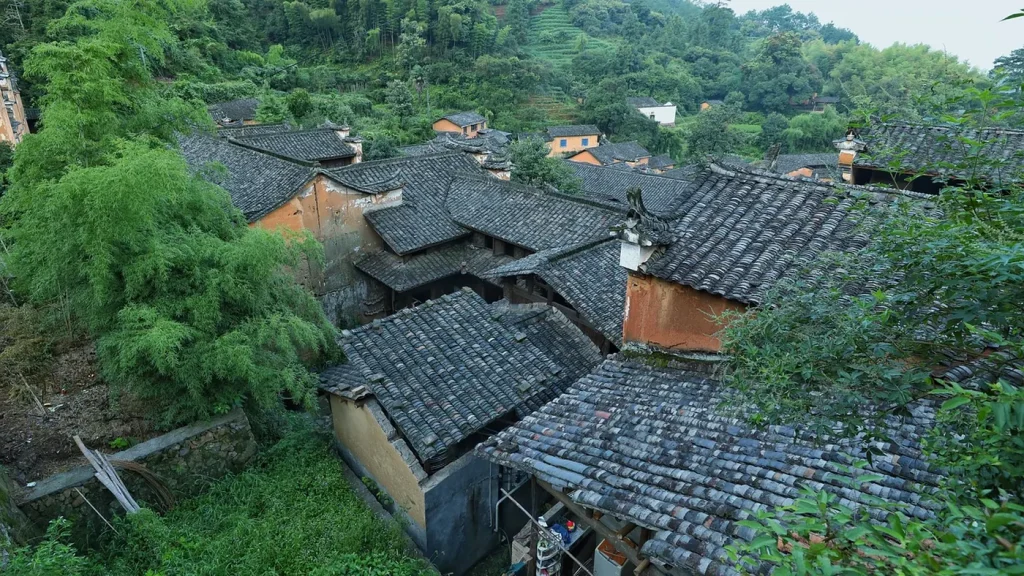
Hui-style villages with white walls and black tiles, surrounded by rapeseed terraces in March. Outside that month it is quieter and still beautiful — the architecture is the constant.

Fujian tulou
Circular earthen buildings up to four storeys, housing entire clans, built for defence between the 12th and 20th centuries. Several are UNESCO-listed and still inhabited. Stay a night in one; it is basic but the experience is the point.
How to travel these places
- Expect local transport — buses, shared taxis, and the occasional motorbike. Hire a driver for a day (RMB 300–500) rather than piecing together buses.
- Book accommodation in advance in villages — small guesthouses fill up at weekends with domestic tourists.
- Learn the Chinese name and show it to drivers; English names rarely help outside cities.
- Carry cash — small shops and guesthouses may not accept cards, and Alipay works only if the vendor accepts it.
- Avoid weekends and holidays — these places are unknown to foreigners but popular with Chinese photographers.
Why bother
The headline sites are crowded because they are extraordinary, and you should see them. But the memory most travellers keep is of a village where nobody spoke English, a meal that cost RMB 30, and a landscape they had not seen on Instagram. That is what the detour buys.
Practical logistics for rural China
- Transport: high-speed rail reaches the county towns, but the last 30–60 km is bus or hired car. A driver for a day costs RMB 300–500 and removes most of the friction.
- Accommodation: guesthouses are basic but clean; book ahead at weekends, when domestic photographers arrive.
- Payment: Alipay works in most shops now, but carry RMB 300–500 for village stalls and small guesthouses.
- Language: English is rare outside cities. Download an offline translation pack and save place names in Chinese.
- Timing: weekdays outside holidays; the difference in crowd levels is large.
Etiquette in villages
These are working communities, not sets. Ask before photographing people, do not enter homes uninvited, and buy something if you spend an hour in a shop. In Tibetan areas, walk clockwise around monasteries and stupas, and do not photograph monks without permission.
Frequently asked questions
Are these places hard to reach?
Moderately. All are accessible by public transport with one or two changes; a hired driver removes most of the friction.
Do I need to speak Chinese?
It helps enormously. Translation apps work offline; download the language pack.
Are they safe?
Yes. Rural China is safe; the risks are roads and weather, not crime.
Do I need a permit?
Not for any of the places listed, except Tibetan areas outside designated tourist zones. Tibet itself requires a permit and a guide.
Can I do these as day trips?
Some — Xiapu, Wuyuan and the tulou can be done from a nearby city. Langmusi, Seda and Hulunbuir need at least one night.
Is English spoken?
Rarely. Save place names in Chinese, download an offline translation pack, and expect to point a lot.
Transport and access change. If something here is out of date, tell us on the contact page.