
Last reviewed: 10 November 2026. Chinese history runs long, and most visitors arrive with a blur of dynasties and no way to place what they are looking at. This guide gives you the short version — four thousand years in ten minutes — plus the art forms and museums that make it concrete.
The dynasties that matter
| Period | Dates | What it left behind |
|---|---|---|
| Shang | c. 1600–1046 BC | Bronze vessels, oracle bones, the first writing |
| Zhou | 1046–256 BC | Confucius and Laozi; the philosophical foundation |
| Qin | 221–206 BC | Unification, the first emperor, the Terracotta Army |
| Han | 206 BC–220 AD | The Silk Road, paper, the name “Han” for Chinese people |
| Tang | 618–907 | Cosmopolitan golden age; poetry, ceramics, Chang’an |
| Song | 960–1279 | Printing, gunpowder, landscape painting, tea culture |
| Yuan | 1271–1368 | Mongol rule; Beijing becomes the capital |
| Ming | 1368–1644 | The Forbidden City, the Great Wall as you see it, blue-and-white porcelain |
| Qing | 1644–1912 | The last dynasty; gardens, imperial expansion, collapse |
| Republic | 1912–1949 | End of empire, civil war, Shanghai’s colonial era |
| PRC | 1949– | Modern China |
If you remember one thing: Tang for openness, Song for refinement, Ming for architecture. Most of what tourists photograph is Ming and Qing.
Art forms, and where to see them
Calligraphy
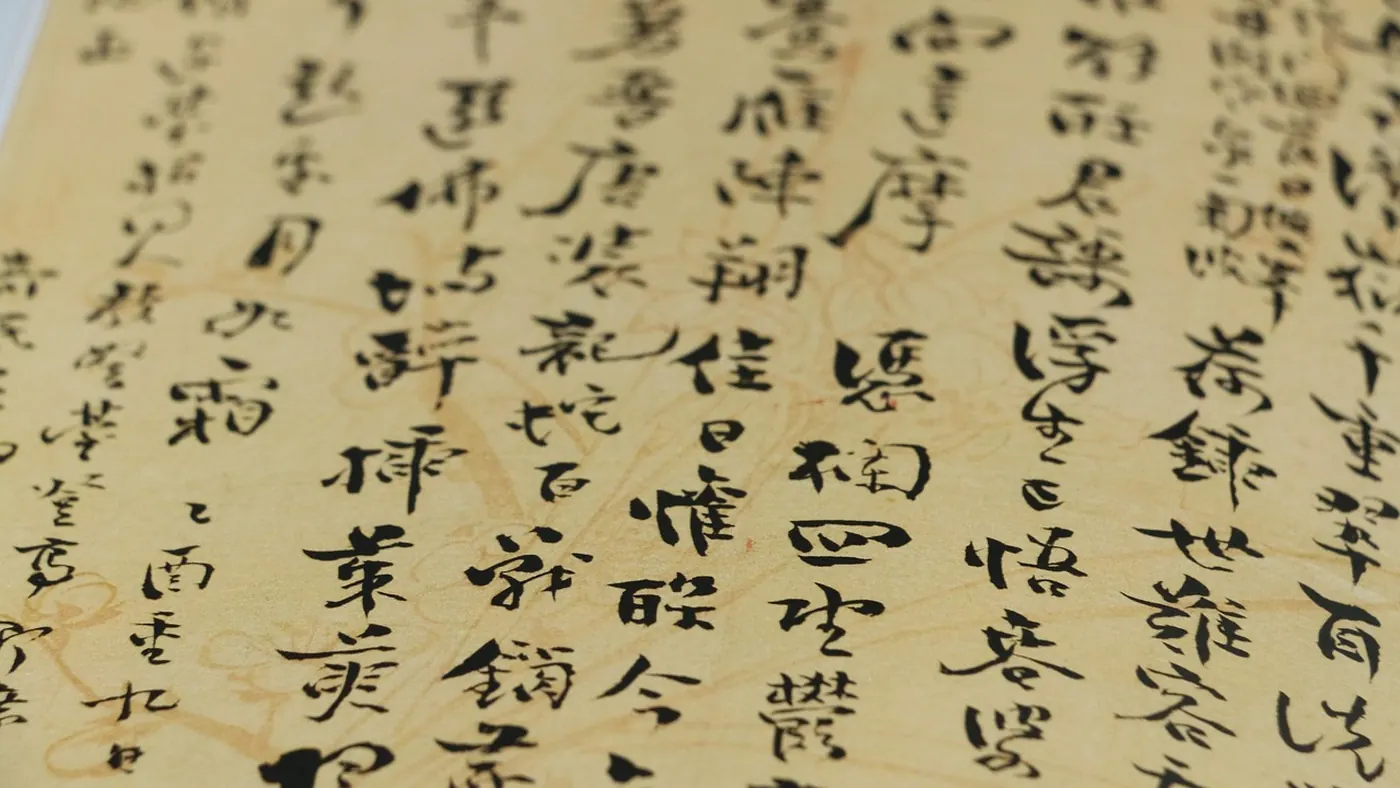
The highest art form in the Chinese tradition — writing as expression, judged on brush control and character. You will see it on signs, scrolls and temple gates. The best collections are in the Palace Museum (Beijing) and the Shanghai Museum.
Painting
Two traditions: the ink landscape (shan shui), where empty space carries as much meaning as the brushstroke, and the detailed court painting of figures and birds. Song dynasty landscapes are the peak.
Ceramics
Porcelain is China’s global export and its most legible art. Blue-and-white (Ming) is the famous type; celadon and Jun wares are older and subtler. Jingdezhen in Jiangxi is the historic kiln town and still produces today.
Opera
Peking opera is the tourist-friendly form: painted faces, acrobatics, high-pitched singing. Kunqu is older, slower and more literary. Both are best experienced with a plot summary in advance — the stories are simple, the language is not.
Architecture
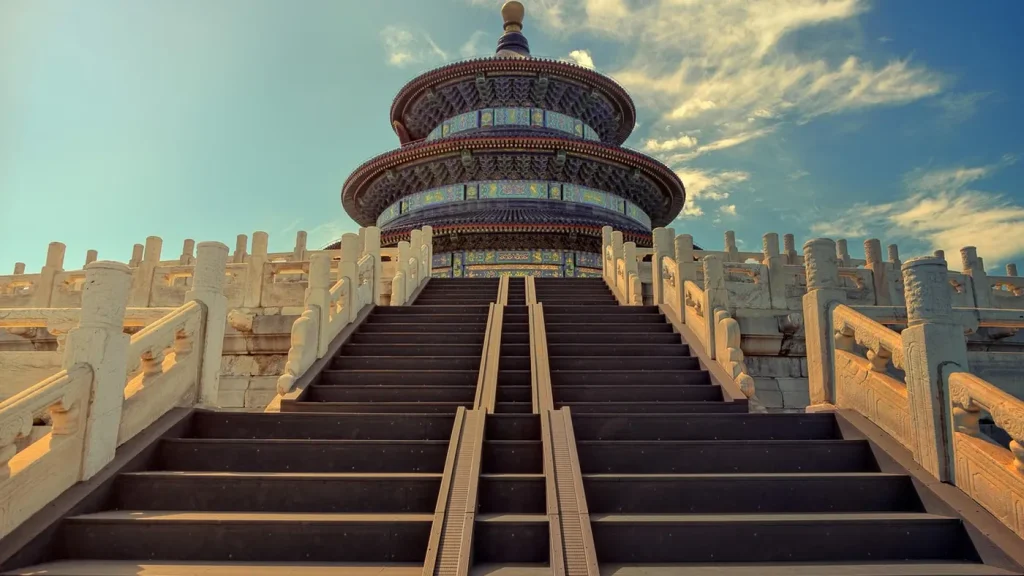
Timber frames, bracket sets, courtyards and feng shui siting. The Forbidden City is the masterpiece; the hutong courtyard house is the vernacular version.
Museums worth the time
| Museum | City | Why |
|---|---|---|
| Palace Museum | Beijing | The imperial collection in the imperial building |
| National Museum of China | Beijing | Comprehensive, free, enormous |
| Shanghai Museum | Shanghai | Best bronzes and ceramics outside Beijing |
| Shaanxi History Museum | Xi’an | Tang dynasty gold and the Silk Road |
| Sanxingdui | Guanghan | Bronze masks from a civilisation nobody expected |
| Yin Xu | Anyang | Shang capital, oracle bones in situ |
How to read a temple
- Layout — gates, courtyards, halls in ascending importance, usually on a north–south axis.
- Roofs — the number of figures on the ridge indicates rank; yellow tiles were imperial.
- Guardians — door gods and lions protect the entrance; their expressions tell you what they guard against.
- Incense — three sticks for heaven, earth and humanity; do not point them at people.
- Photography — usually allowed in halls, but not of worshippers; look for signs.
A one-week history route
If you want the dynasty story to make sense rather than blur, this sequence works:
- Beijing, two days — the Forbidden City for Ming and Qing, the National Museum for the long view.
- Xi’an, two days — the Terracotta Army for Qin, the Shaanxi History Museum for Tang, the city wall for Ming.
- Anyang or Luoyang, one day — Yin Xu for Shang oracle bones, or Longmen for Buddhist carving.
- Shanghai, one day — the Shanghai Museum for bronzes and ceramics, which ties the whole thing together.
The order matters: start with the imperial architecture, then go back in time to the bronze age, then see the objects in a museum where the labels explain them.
How to look at a Chinese painting
A Chinese ink painting is read differently from a Western one. Four things to look at:
- Empty space. The unpainted area is part of the composition — it suggests mist, water or distance, and it is where the eye rests.
- Brushwork. Lines carry the artist’s character. A single stroke can be judged for speed, pressure and confidence.
- Inscription and seal. Poems, dedications and red seals are part of the work, not decoration; they record who owned and admired it.
- Subject conventions. Bamboo means resilience, plum blossom means winter endurance, mountains mean stability. The symbolism is a shared vocabulary, not a private code.
Landscape (shan shui) is the highest genre, and the Song dynasty is its peak. Figure painting and bird-and-flower are the other two traditions worth knowing.
Frequently asked questions
How old is China?
Written records go back about 3,200 years; continuous civilisation on the Central Plains rather longer. The “5,000 years” figure is cultural rather than archaeological.
Which dynasty built the Great Wall?
Several did. The wall you visit is mostly Ming (1368–1644), built in brick and stone; earlier walls were rammed earth.
Is the Terracotta Army a tomb?
It is a burial pit guarding the tomb of Qin Shi Huang. The tomb itself is unexcavated.
Museum hours change. If something here is out of date, tell us on the contact page.